Oncoplasty: treating breast cancer while protecting the shape of the breast A short guide to a surgical approach that sits between a simple lumpectomy and a mastectomy.
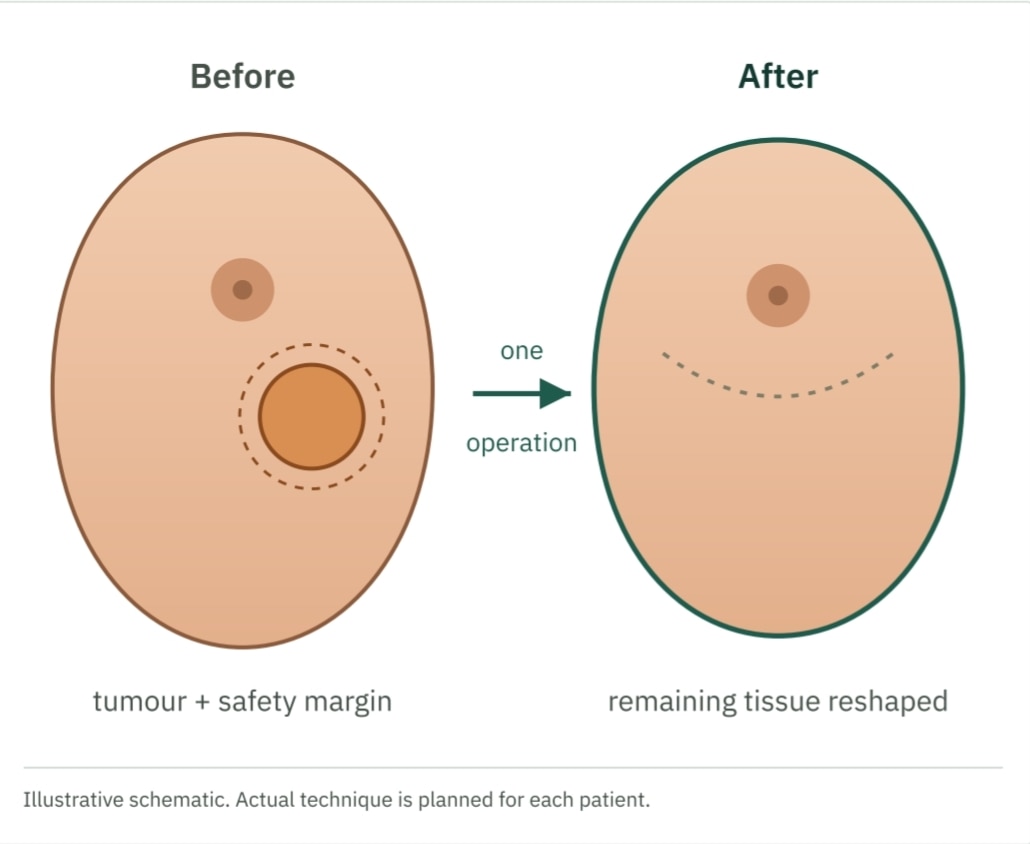
What is oncoplasty? After remaining tissue reshaped For many women with early breast cancer, removing only the lump (breast conservation surgery) followed by radiotherapy works as well as removing the whole breast. Thecatch: if a large piece of tissue has to come out to clear the cancer safely, the breast can be left dented, pulled out of shape, or with the nipple drawn to one side. Oncoplasty combines cancer surgery with plastic surgery techniques. The tumour is removed with a generous margin of healthy tissue, and the remaining breast is reshaped in the same operation. It is often called the "third pathway" between a simple lumpectomy and a mastectomy.
Two levels, depending on how much tissue is removed < 20% Level I Smaller removal, up to about a fifth of the breast Breast tissue is freed up and stitched together to fill the gap Nipple is re-centred if it would drift No extra skin removed 20–50% Level II Larger removal, from a fifth up to half of the breast Uses breast-reduction or breast-lift style techniques Some extra skin is removed to reshape the breast Needs a surgeon specially trained in these methods
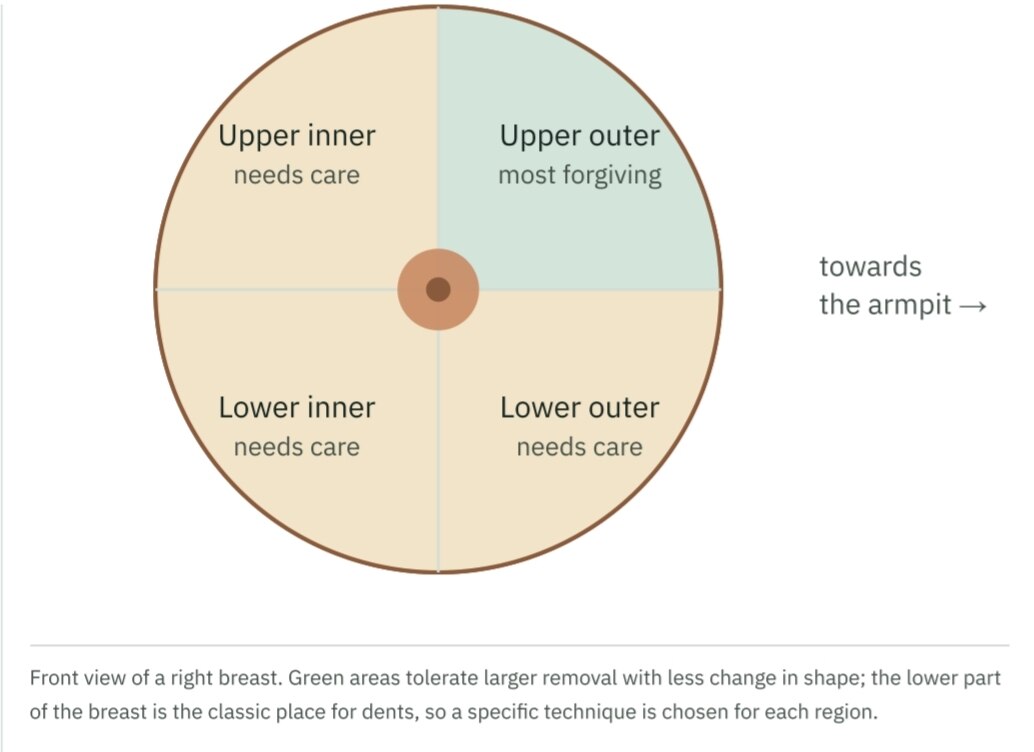
After a Level II operation the treated breast is usually smaller, rounder and slightly higher than the other side, so matching the opposite breast can be discussed, either at the same time or later. Three things guide the plan How much tissue needs to be removed compared with the size of the breast. Where the tumour sits. Some areas hide a large removal well; others show a dent easily. How dense the breast is on mammography, which affects how safely the tissue can be moved.
When is it considered? A tumour that is large compared with the breast, where a standard lumpectomy would leave a visible deformity. Widespread early disease such as extensive DCIS, lobular cancers, or more than one area in the breast. Tumours that shrank only partly after chemotherapy or hormone therapy. Cases where an earlier lumpectomy left cancer cells at the edge and more tissue must be removed.
What to know honestly Cancer treatment itself does not change: the same tests, radiotherapy, and drug treatments apply. Studies of oncoplastic surgery report cancer control comparable to standard breast conservation.
Scars can be longer or more than one, and Level II surgery may leave the two breasts different in size. Nipple sensation can be reduced after extensive reshaping. As with any surgery, there are risks. In fatty breasts, areas of tissue can heal poorly, which occasionally delays further treatment. Careful planning around breast density helps lower this. Oncoplasty is not right for everyone; sometimes mastectomy remains the better choice.
Wondering if this applies to you? Bring your scans and reports to a consultation and we can discuss which approach suits your cancer and your priorities. Dr. Priyank Chawathe MBBS, MS, DrNB (Surgical Oncology) · Consultant Surgical Oncologist & Robotic Surgeon Wockhardt Hospitals, Mira Road, Mumbai