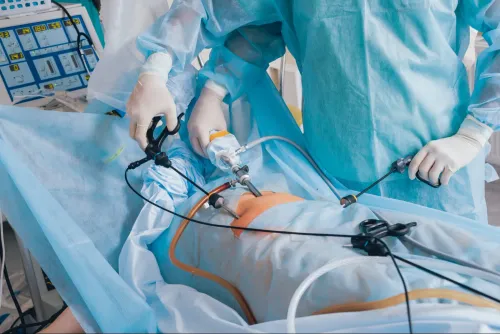
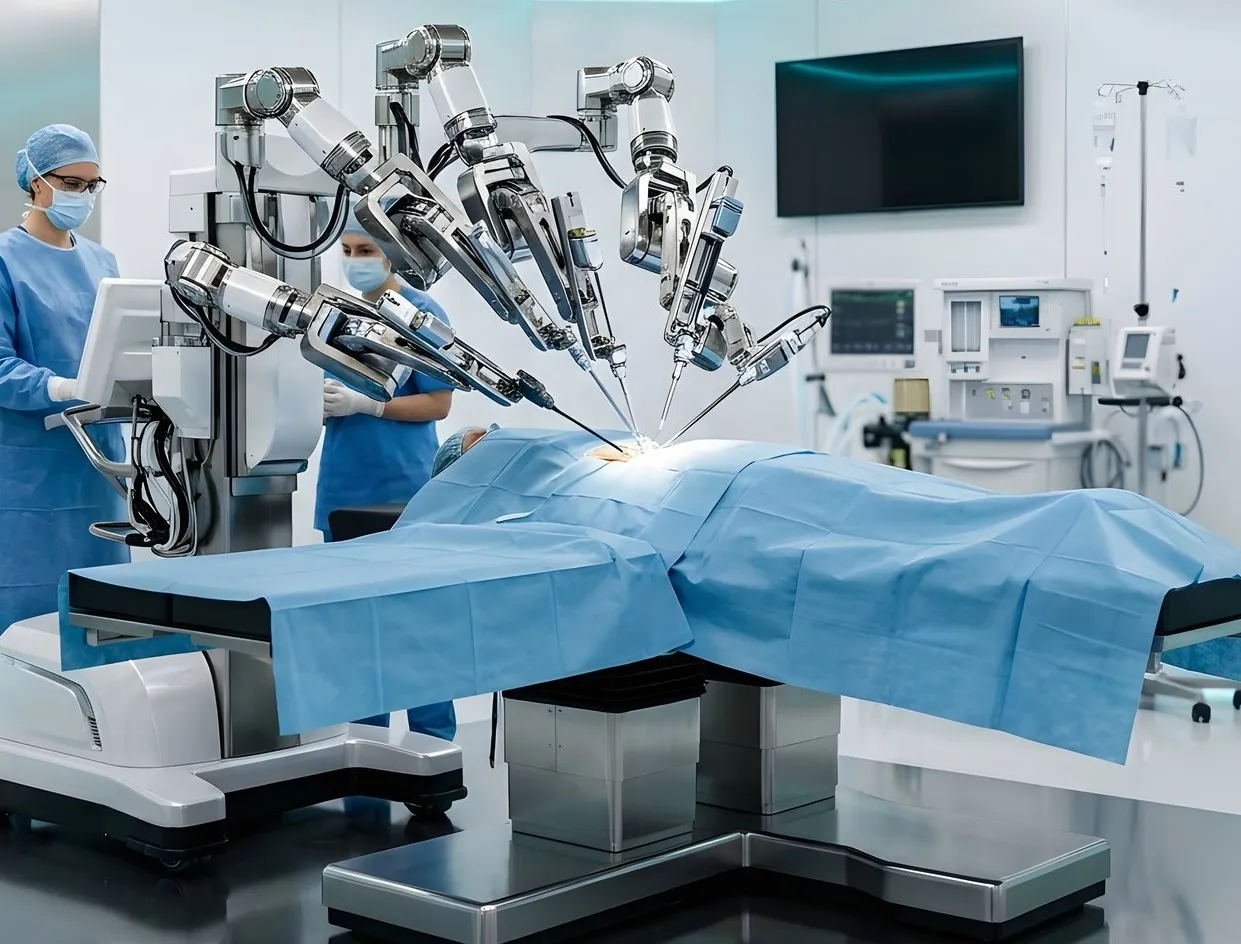
Robotic surgery has expanded the options available for performing selected gynaecological cancer operations. A robotic hysterectomy allows a trained surgeon to perform minimally invasive surgery using a robotic surgical platform, but the technology itself does not determine whether a procedure is suitable.
For patients in Andheri, the most important question is whether a robotic approach is appropriate for the particular diagnosis, stage, anatomy, and treatment objective.
What happens during robotic hysterectomy?
The surgeon controls the robotic instruments from a console. The system translates the surgeon's hand movements into precise movements of instruments placed through small abdominal incisions.
The robot does not perform the surgery independently.
The operation remains entirely directed by the surgeon.
Why can a minimally invasive approach be considered?
For appropriate patients, minimally invasive surgery can offer practical recovery benefits compared with a larger abdominal incision.
Potential benefits may include:
- Smaller incisions
- Reduced incision-related discomfort
- Earlier mobilisation
- Shorter hospital recovery in selected patients
- Earlier return to routine activities
However, these potential advantages must always be considered alongside cancer-specific safety.
Which cancer patients may be candidates?
Robotic hysterectomy may be considered for selected gynaecological cancers, particularly when minimally invasive surgery is considered oncologically appropriate.
The decision can depend on:
- Cancer type
- Disease stage
- Tumour characteristics
- Previous abdominal operations
- Body anatomy
- Other medical conditions
- Required extent of surgery
- Lymph-node assessment needs
A patient's eligibility cannot be established simply because robotic technology is available.
Is robotic surgery always the better approach?
No single surgical technique is best for every cancer patient.
Open surgery may be more appropriate when extensive disease needs to be removed, when complex reconstruction is anticipated, or when another clinical factor makes minimally invasive surgery unsuitable.
There are also cancer-specific situations where the choice of surgical approach requires particular caution.
The surgeon should therefore explain why a particular method is being recommended.
What should patients ask during consultation?
Instead of asking only, “Can my operation be robotic?” consider asking:
- Is minimally invasive surgery appropriate for my cancer?
- What is the objective of the operation?
- Will lymph nodes need assessment?
- Could the procedure need conversion to open surgery?
- What complications are relevant to my case?
- What recovery time should I realistically expect?
- Will further cancer treatment be required afterward?
These questions place the technology within the larger treatment context.
Dr. Priyank Chawathe provides surgical oncology assessment for patients who may require conventional, minimally invasive, or robotic cancer surgery according to clinical suitability.
Experience matters beyond the technology
A robotic platform is a surgical tool. Outcomes depend on many factors, including appropriate patient selection, cancer staging, surgical planning, surgeon expertise, perioperative care, and the biological behaviour of the disease.
Patients considering robotic hysterectomy should therefore evaluate more than the availability of a robotic system.
The consultation should provide a clear explanation of the diagnosis, proposed extent of surgery, expected benefits, limitations, possible complications, and alternatives.
When robotic hysterectomy is appropriate, it can provide a minimally invasive route for performing selected cancer operations. The decision, however, should remain centred on achieving sound cancer treatment rather than choosing a procedure solely because it uses newer technology.
Keywords