
An operation is planned only after the surgeon knows what the tumour is, how far it has spread, whether it can be removed safely and what treatment sequence offers the best chance of control. By the end, you will know which records to bring, how staging changes the recommendation, why cancer type affects the operation, and when open, laparoscopic or robotic surgery is appropriate.
Key takeaways
- Bring pathology, imaging, blood results, medication lists and prior treatment records.
- Confirm cancer type, stage, spread and resectability before agreeing to surgery.
- Ask why chemotherapy or radiotherapy comes before or after the operation.
- Compare open, laparoscopic and robotic surgery by safety, access and recovery needs.
What to Bring and Ask at the First Oncosurgery Consultation
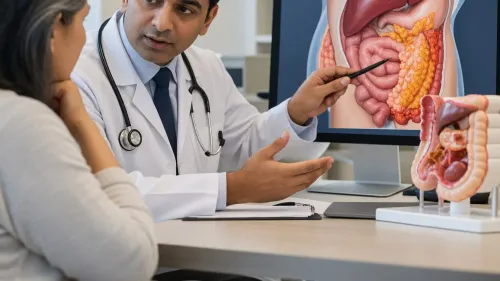
The oncosurgeon needs proof of the cancer’s type and extent, plus evidence that you can tolerate treatment, before discussing an operation. For your first consultation, bring the pathology report, biopsy report or slides, imaging scans and reports, blood results, medication and allergy list, prior operation notes, and a record list of previous treatment.
Add your symptoms, weight changes, medical conditions, and priorities about fertility, bowel, urinary or sexual function.
Prepare questions for surgeon visits:
- What is the confirmed cancer type, stage, and location?
- Is it resectable, and does it involve major vessels, nearby organs, lymph nodes, or distant sites?
- Why recommend surgery first instead of chemotherapy, immunotherapy, targeted therapy, or radiation?
- What will you remove, and could I need reconstruction, a stoma, or vascular repair?
- What are the main risks, hospital stay, recovery limits, and effects on daily function?
- Which test or specialist review could change this plan?
| Plan | Main purpose | Question to clarify |
|---|---|---|
| Surgery first | Remove localized tumour | Why is immediate surgery safest? |
| Treatment first | Address tumour biology or shrink disease | What result would permit surgery? |
| No operation now | Surgery is unsafe or unlikely to help | What must change? |
How Diagnosis, Stage and Resectability Are Confirmed
A tumour is considered removable only when its biology, location and spread allow complete cancer surgery with acceptable risk. A visible mass alone does not prove resectability.
1. Confirm the diagnosis. A biopsy is examined by histopathology to identify the cancer type and grade. Immunohistochemistry detects markers that distinguish tumour subtypes and can reveal treatment-relevant features. Ultrasound may guide a needle biopsy, while endoscopy can both inspect a hollow organ and obtain tissue.
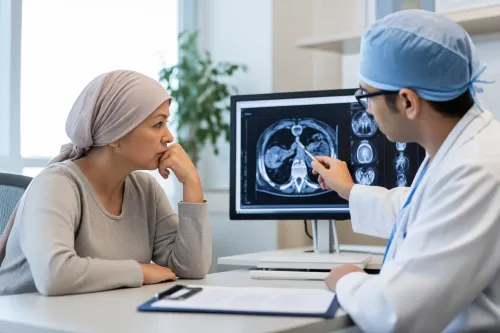
2. Map the primary tumour. A contrast CT scan shows size, nearby organs, lymph nodes and many blood vessels. An MRI scan gives clearer detail for selected areas, including the pelvis, liver, brain or soft tissues. The surgeon checks whether the tumour reaches major arteries, veins, nerves, body-wall structures or an adjacent organ.
3. Look for disease beyond the operation. PET-CT can identify metabolically active deposits, while a staging examination may include targeted scans, blood tests or endoscopic assessment based on the cancer type. The surgeon combines these findings with symptoms, organ function, nutrition and fitness for anaesthesia.
The resulting tumour stage describes local depth, regional lymph-node involvement and distant spread. Resectability may be classified as resectable, borderline resectable or locally advanced; pancreatic tumours, for example, are judged partly by their relationship to major vessels. If scans cannot settle the question, laparoscopy or exploration can reveal spread that imaging missed.
The team then decides whether surgery offers complete removal or whether treatment before surgery is safer.
Why Treatment May Start Before or After Surgery
Surgery comes first when imaging shows a removable tumour, no distant spread, and an R0 resection (no cancer at the cut edges) is realistic without delaying essential systemic treatment. It may start later when treatment first can shrink disease, reveal its biology, treat micrometastases, or improve the chance of complete removal.
| Option | What it does | When it applies |
|---|---|---|
| Surgery first | Removes the primary and permits pathology and node assessment | Clear localized disease, especially some colon or breast cancers |
| Neoadjuvant treatment | Uses chemotherapy, immunotherapy, targeted therapy or radiation before surgery | Locally advanced rectal, esophageal, gastric, pancreatic or selected breast cancers; it can improve resectability |
| Adjuvant treatment | Uses chemotherapy, immunotherapy, targeted therapy or radiation after surgery | Residual risk, involved nodes, aggressive pathology or a high chance of micrometastases |
The oncosurgeon weighs response, anatomy and fitness, not scan size alone. For pancreatic cancer, vessel involvement may make preoperative therapy preferable; for ovarian cancer, surgery may establish extent and remove visible disease before chemotherapy.
A patient who cannot safely tolerate the operation or a likely delay in postoperative treatment may need optimisation or a different sequence.
How the Operation Changes by Cancer Type
Tumour location, depth, lymph-node risk and the organ’s job determine how much tissue is removed, which nodes are sampled and whether function can be preserved while aiming for an R0 resection.
- Breast cancer: Breast-conserving surgery removes the tumour with a margin when its size and position permit; mastectomy is considered when disease is extensive, multifocal or cannot be safely cleared. Axillary staging may use sentinel-node biopsy rather than removing many underarm nodes.
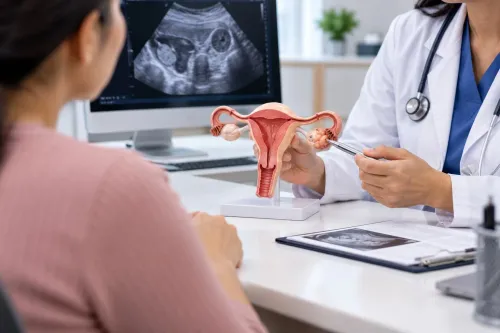
- Gynecologic cancer: A uterine tumour may require hysterectomy and lymph-node assessment, with fertility and nearby-organ involvement shaping the extent. For ovarian cancer, cytoreduction aims to remove all visible disease, but bowel, bladder or upper-abdominal surgery can be necessary.
- Oesophageal and stomach cancers: Depth and nodal risk determine whether endoscopic removal is enough or whether an oesophageal resection or gastric resection is needed. These operations include organ-specific lymphadenectomy and reconstruction, so nutrition and the remaining organ’s function affect safety.
- Colon cancer: A colon resection follows the tumour-bearing segment, its blood supply and lymphatic drainage. The surgeon must also judge whether a safe bowel join is possible; pathology commonly targets examination of at least 12 regional lymph nodes.
- Pancreatic cancer: Pancreatic cancer near the pancreatic head, body or tail requires different operations, and blood-vessel involvement can make an R0 margin impossible. The plan balances reconstruction, digestion and diabetes risk against cancer clearance.
- Rectal cancer: Pelvic MRI shows tumour height, depth, threatened margins and sphincter involvement. After planned preoperative treatment, total mesorectal excision may preserve the anus only when it leaves a clear margin and acceptable function; otherwise, a permanent stoma may provide safer control.
How Surgeons Choose Open, Laparoscopic or Robotic Access
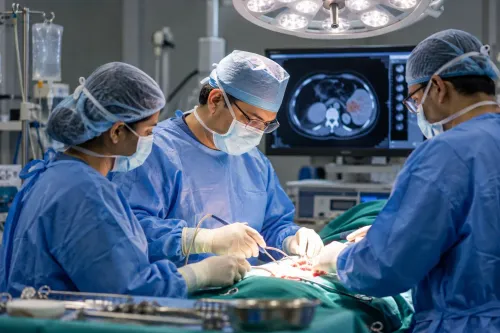
The cancer must come out safely and completely; a smaller incision is secondary. The surgeon first asks whether minimally invasive surgery can achieve an oncologically adequate, often R0, resection and an en-bloc resection when adjacent tissue or organs are involved.
| Access | Strength | Limitation |
|---|---|---|
| Open surgery | Direct access for extensive tumours, vascular invasion, emergency obstruction or major bleeding | Larger incision, greater wound burden and longer recovery |
| Laparoscopic surgery | Small incisions, less wound pain and faster recovery for suitable anatomy | Rigid instruments and limited manoeuvrability can make complex dissection difficult |
| Robotic surgery | Three-dimensional magnified vision and articulated instruments in confined spaces | Longer operating time, higher cost and no guarantee of better cancer survival |
Tumour position, adhesions, body anatomy and the need to reconstruct an organ can outweigh incision size. Robotic surgery remains an access method, not a cancer treatment.
A planned laparoscopic surgery or robotic surgery can require conversion to open surgery if bleeding, unsafe anatomy or unexpected invasion prevents complete removal. The surgeon balances incision recovery against complications: forcing a minimally invasive approach can cause injury or leave cancer behind, while open surgery may provide the safest en-bloc resection.
How Lymph Nodes, Recovery and Personal Health Affect the Final Plan
A sentinel lymph-node biopsy samples the first draining nodes, often staging breast cancer or melanoma without removing the entire basin. A formal lymph-node dissection removes a wider nodal group when tumour location, stage or nodal risk demands it.
In colon cancer, the surgeon follows the affected segment, blood supply and lymphatic drainage; pathology commonly assesses at least 12 regional nodes. Wider node surgery increases lymphoedema risk.
Surgery proceeds only when cancer benefit outweighs harm. Cardiopulmonary risk, poor nutrition, frailty, previous operations and possible nerve injury may require conditioning, dietary support or a modified operation. At consultation, Priyank Chawathe can help you compare these risks with the cancer-control benefit.
Your expected life after surgery matters too. Discuss a stoma, reconstruction, urinary function, sexual function and fertility before consenting. Planned chemotherapy or radiation can alter timing, while postoperative care may determine whether recovery is realistic. If function would be unacceptable, the team may modify or reject surgery.
Related services
Breast Surgical Oncology focuses on the diagnosis and surgical management of breast cancer and other breast conditions requiring specialized surgical care. View service → |
Gynecologic Oncology focuses on the diagnosis and treatment of cancers affecting the female reproductive system, including cancers of the uterus, cervix, ovaries,... View service → |
Frequently asked questions
What should you bring to your first oncosurgery consultation?
Bring pathology and biopsy reports or slides, imaging scans and reports, blood results, medication and allergy lists, prior operation notes, and previous treatment records.
How are cancer stage and resectability confirmed?
The team reviews pathology, imaging, blood results and examination findings to identify the cancer type, stage, spread and whether surgery can remove it safely.
Why might treatment begin before surgery?
Chemotherapy, radiotherapy or combined treatment may come first when shrinking the tumour, treating microscopic disease or improving surgical control is part of the plan.
How do surgeons choose between open, laparoscopic and robotic access?
They compare tumour location and size, required margins, nearby structures, lymph-node work, your health and the safety and control each approach provides.
Related services
Complex Cancer Resections & Reconstructions Complex Cancer Resections & Reconstructions Some cancers can involve vital organs, major blood vessels, nerves, muscles, bones, or surrounding tissues, making their surgical treatment... View service → |
Robotic & Minimally Invasive Cancer Surgery Robotic & Minimally Invasive Cancer Surgery Robotic and minimally invasive cancer surgery uses advanced surgical techniques to treat selected cancers through smaller incisions compared with... View service → |
Head & Neck Oncology Head and neck oncology focuses on the diagnosis and treatment of cancers affecting the **mouth, throat, voice box, nose, sinuses, salivary glands,... View service → |
Upper GI Oncology Upper Gastrointestinal (Upper GI) Oncology focuses on the diagnosis and treatment of cancers affecting the upper part of the digestive system,... View service → |